
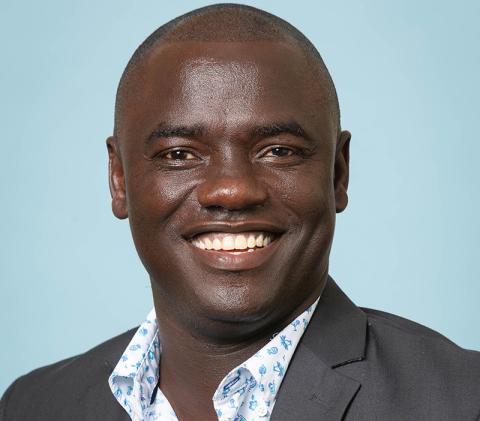
Samuel Kakraba, PhD
Assistant Professor
Education & Affiliations
Biography
Dr. Samuel Kakraba is an Assistant Professor of Biostatistics and Data Science at Tulane University’s Celia Scott Weatherhead School of Public Health and Tropical Medicine; a Senior Advisor for Health Data Science Engagement with the Connolly Alexander Institute of Data Science (CAIDS); an Affiliate Assistant Professor with the Tulane Center for Aging in the School of Medicine; an expert member of the Dean’s Data Science and Artificial Intelligence Initiative; and the University Liaison and Coordinator for Global Engagement with four Ghanaian institutions: Kwame Nkrumah University of Science and Technology, Ensign Global University, the University of Cape Coast, and the University of Ghana. In these roles, he leads the design and deployment of scalable, reproducible AI and data science workflows that bridge robust methodological innovation with real-world public health and clinical impact, with a particular focus on aging, neurodegenerative diseases, and digital health. As principal investigator of the SMART-Pred initiative at CAIDS, he is developing an AI-driven, multi-algorithm platform to support population health surveillance, equitable risk prediction, and decision support across conditions such as cancer, mental health, maternal health outcomes, infectious diseases, among others.
Dr. Kakraba’s research is anchored in the development and deployment of highly efficient, computationally driven pipelines that wield an expansive arsenal of explainable statistical and biostatistical machine learning techniques, expertly operationalized across premier computational platforms. These pipelines are meticulously architected for robust estimation, high-dimensional prediction, and rigorous inference across pharmaceutical sciences, biomedical research, and population health—all distinguished by an uncompromising commitment to algorithmic explainability, inherent fairness, and the trustworthy governance of AI systems.
Through extensive collaborative research, he has developed data science driven machine learning algorithms for quantitative structure activity relationship (QSAR) modeling to screen, identify, and characterize novel small-molecule candidates, including nonsteroidal anti-inflammatory drugs, for neurodegenerative diseases such as Alzheimer’s disease, Parkinson’s disease, and Huntington’s disease. His work integrates AI enhanced QSAR, cheminformatics, molecular modeling, docking, and simulation studies with experimental validation in models of protein aggregation and proteostasis failure, aiming to accelerate discovery of safer and more effective therapeutics.
A complementary strand of Dr. Kakraba’s scholarship focuses on mathematical graph theoretic modeling and complex network analysis, interfaced with statistical and machine learning methods, molecular modeling, and other bioinformatics techniques. By constructing and analyzing graph based representations of proteins, mutations, and interaction networks, he addresses critical questions in systems biology, protein science, and infectious disease genomics, including graph theoretic models of single point mutations, spectral stability analyses of protein mutation networks, and network based approaches to understanding viral and protein structural dynamics.
Dr. Kakraba extends his impact far beyond methodological research, holding co-inventor status on international and domestic patent portfolios for pioneering drug candidates combating neurodegenerative diseases and cancer, while simultaneously anchoring the scholarly discourse through a prolific publication record and influential editorial stewardship across top-tier journals. His pedagogical and mentorship legacy is equally transformative: he has guided an extensive cohort of master's and doctoral scholars through their academic journeys, shaped countless thesis committees, and spearheaded the design of innovative graduate curricula in artificial intelligence and deep learning specifically for health data science. Beyond the classroom, he provides intensive, equity-driven mentorship to a remarkably diverse spectrum of local, international, and underrepresented trainees, strategically propelling them into competitive graduate programs and flourishing research careers at the dynamic intersection of AI, biostatistics, and biomedical innovation.
Prior to joining Tulane University, Dr. Kakraba served as an Assistant Professor of Statistics and Data Science in the Department of Mathematics and Statistics at Eastern Kentucky University (August, 2021 to December, 2023), where he taught and developed courses in applied statistics, regression analysis, statistical learning, and R based data mining, directed a statistical consulting center, and mentored graduate students on AI and machine learning driven projects.
Research Areas
Data Science, Artificial Intelligence, and Machine Learning in Healthcare and Public Health
Biostatistics and Statistical Learning, including predictive modeling, missing data, and trial design
Drug Discovery and Design, with emphasis on QSAR, AI‑enhanced pipelines, and small‑molecule development
Aging, Neurodegenerative Diseases, and Neuroscience, including cell culture and C. elegans models
Bioinformatics, Computational Biology, Protein Science, and Cheminformatics
Molecular Modeling and Simulation for protein–ligand and protein–protein interactions
Mathematical and Statistical Predictive Modeling, Graph Theory, and Network Science
Applied Statistics for Biomedical, Clinical, and Population Health Research
Honors & Awards
2026: Tulane WSPH–CAIDS AI Seed Grant, Principal Investigator, SMART-pred: Machine Learning for Population Health Surveillance ($40,000; WSPH Seed Funds: $20,000 ; CAIDS Research Assistant Funds: $20,000), Tulane University, New Orleans, LA, USA.
2016–2021: Graduate Research Assistant Award (full tuition waiver, stipend, and health insurance), NIH Program Project Grant AG012411-17A1, Department of Information Science, UALR & UAMS, Little Rock, AR, USA.
2015–2016: Graduate Research Assistant Award (full tuition waiver, stipend, and health insurance), Department of Information Sciences, University of Arkansas at Little Rock, Little Rock, AR, USA.
2014/2015: Faculty Award – Outstanding Graduate Student, Department of Mathematics and Statistics, East Tennessee State University, Johnson City, TN 37614, USA.
2014–2015: Graduate Teaching Associate Award (full tuition waiver and stipend), Department of Mathematics and Statistics, East Tennessee State University, Johnson City, TN, USA.
2013–2014: Graduate Teaching Assistant Award (full tuition waiver and stipend), Department of Mathematics and Statistics, East Tennessee State University, Johnson City, TN, USA.
2020/2021: Outstanding College Doctoral Candidate, Donaghey College of Science, Technology, Engineering and Mathematics, University of Arkansas at Little Rock & the University of Arkansas for Medical Sciences, Little Rock, AR 72205, USA.
2020/2021: Outstanding Departmental Doctoral Candidate, Department of Information Sciences, University of Arkansas at Little Rock & the University of Arkansas for Medical Sciences, Little Rock, AR 72205, USA.
2019/2020: Outstanding Oral Presentation (Third Place), Drug Discovery & Development Colloquium, University of Arkansas for Medical Sciences, Little Rock, AR 72205, USA.
Publications
View Dr. Kakraba's publications at his NCBI profile page or Samuel Kakraba, Ph.D. - Google Scholar